


In today’s feed manufacturing environment, time is more than a scheduling metric, it’s margin. Whether you’re producing poultry, swine, dairy, or specialty rations, every minute lost to inefficiency compounds across labor, energy, throughput, and ultimately profitability. The challenge? Most feed mills don’t lose time in obvious failures. They lose it quietly across small, repeated inefficiencies embedded in daily operations.
Turning hidden inefficiencies into measurable throughput gains —
Our team helps feed mills reclaim lost time through strategic system improvements and operational upgrades.
1 | Ingredient Handling Bottlenecks
Where Time Is Lost
Receiving, unloading, conveying, and storing ingredients often create the first choke point. Trucks waiting to unload, slow pit discharge rates, or poorly sequenced ingredient flow can ripple through the entire system.
Why It Happens
- Undersized receiving pits or conveyors
- Inefficient traffic flow or scheduling
- Manual verification processes slowing intake
- Poor bin allocation strategies
How To Get It Back
Modern mills are optimizing intake with automated scheduling systems, faster dump pit designs, and strategic bin mapping. Investing in higher-capacity drag conveyors or leg systems reduces dwell time and keeps raw materials moving. Real-time inventory visibility also eliminates guesswork and unnecessary handling delays.
2 | Grinding Inefficiencies
Where Time Is Lost
Hammermills and grinding systems are notorious for inconsistency—frequent screen changes, uneven particle size, and downtime due to wear.
Why It Happens
- Incorrect screen size for formulation requirements
- Worn hammers reducing efficiency
- Lack of automation in grind control
- Inconsistent feed rates
How To Get It Back
Automated grind control systems that adjust feed rates and monitor motor load can dramatically improve consistency. Regular maintenance schedules (not reactive repairs) keep systems running at peak efficiency. Some mills are also shifting to pre-grind/post-grind hybrid systems to balance flexibility and speed.
3 | Mixing Delays and Inconsistency
Where Time Is Lost
Overmixing, undermixing, and waiting on ingredient staging all slow production.
Why It Happens
- Poor batching accuracy
- Manual ingredient additions
- Inefficient sequencing between batches
- Outdated mixer technology
How To Get It Back
High-efficiency mixers with shorter cycle times (and verified CV performance) can reduce batch times without sacrificing quality. Automated micro-ingredient systems eliminate manual delays and errors. Advanced batching software ensures ingredients are ready exactly when needed—no idle mixer time.
4 | Pelleting and Conditioning Constraints
Where Time Is Lost
Hammermills and grinding systems are notorious for inconsistency—frequent screen changes, uneven particle size, and downtime due to wear.
Why It Happens
- Incorrect screen size for formulation requirements
- Worn hammers reducing efficiency
- Lack of automation in grind control
- Inconsistent feed rates
How To Get It Back
Automated grind control systems that adjust feed rates and monitor motor load can dramatically improve consistency. Regular maintenance schedules (not reactive repairs) keep systems running at peak efficiency. Some mills are also shifting to pre-grind/post-grind hybrid systems to balance flexibility and speed.
5 | Changeovers and Downtime
Where Time Is Lost
Switching between formulations, especially medicated vs. non-medicated feeds, can bring production to a crawl.
Why It Happens
- Manual cleanout processes
- Poor sequencing of production runs
- Lack of flush system efficiency
- Regulatory compliance requirements
How To Get It Back
Smart production sequencing—grouping similar formulations—reduces the need for full cleanouts. Automated flush systems and dedicated lines for sensitive products can drastically cut downtime. Some mills are also using software to simulate production schedules and identify the most efficient run order.
6 | Loadout and Distribution Delays
Where Time Is Lost
Finished feed sitting in bins waiting for loadout or trucks waiting to be filled.
Why It Happens
- Inefficient bin allocation
- Slow loadout systems
- Limited automation
How To Get It Back
High-speed loadout systems with automated scaling and ticketing reduce truck turnaround time. Integrating production data with logistics scheduling ensures the right product is ready at the right time. Real-time communication between dispatch and plant operations eliminates guesswork.
7 | Labor Inefficiencies
Where Time Is Lost
Skilled labor is stretched thin, and too much time is spent on manual, repetitive tasks.
Why It Happens
- Outdated processes requiring hands-on input
- Lack of training or standardized procedures
- Inefficient communication between shifts
How To Get It Back
Automation doesn’t replace labor, it powers it. By removing repetitive tasks (manual batching, data entry, inspections), teams can focus on higher-value work. Standard operating procedures and digital communication tools ensure consistency across shifts.
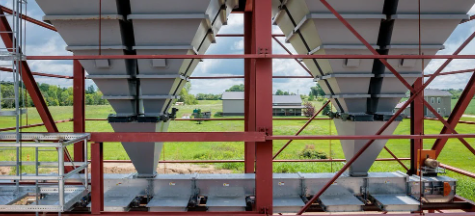
Efficiency in a feed mill isn’t driven by one machine or one upgrade. It comes from how every part of the operation works together. From receiving and storage to conveying and loadout.
TAM Systems helps feed mills identify inefficiencies, improve material flow, modernize operations, and create systems built for long-term performance. With an in-house design team and millwright crews, you work with one team from start to finish.
Because when operations run efficiently:
- Downtime decreases
- Throughput increases
- Labor works smarter
- Profitability improves
